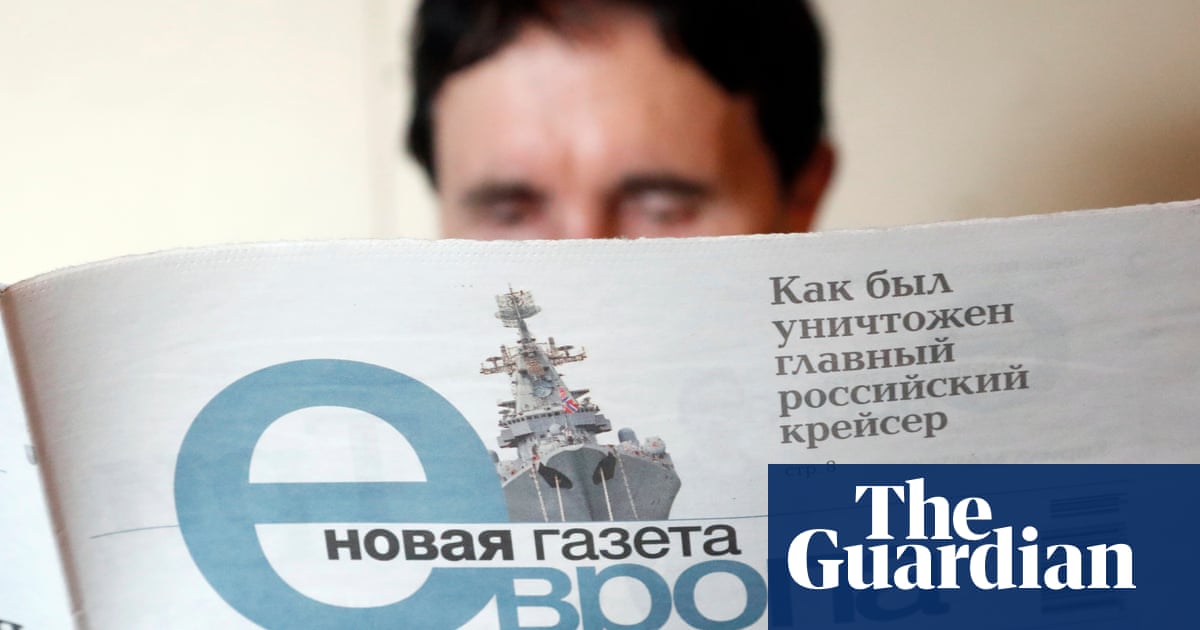
Novaya Gazeta, one of Russia’s most prominent and enduring independent media outlets, has announced that it will permanently close its doors. The publication, whose former editor-in-chief Dmitry Muratov was awarded the Nobel Peace Prize in 2021, cited intolerable pressure from the state, including the loss of its newsroom, the shutdown of its donation platforms, and the stripping of its legal right to publish.
“This is not just our own story; it is the story of a country and a society that are being systematically crushed,” wrote editor-in-chief Sergei Sokolov on the newspaper’s website.
Decades of Dogged Reporting and High Costs
Launched in the 1990s and initially supported in part by the late Soviet leader Mikhail Gorbachev, Novaya Gazeta built its reputation on fearless, long-form investigations into government corruption, human rights abuses, and pressing social issues. That work came at an extraordinary human cost. Over the years, six of the publication's journalists were assassinated, including Anna Politkovskaya, who was shot dead in the stairwell of her Moscow apartment building in 2006.
While the newsroom operated under a steady climate of repression for decades, the full-scale invasion of Ukraine in February 2022 fundamentally transformed the media landscape, making independent reporting inside Russia nearly impossible. Novaya stood as one of the final critical voices maintaining operations within the country's borders.
“For nearly five years of ***, we managed to keep working while being completely encircled by the security services. Now it’s over. We have found ourselves in a ‘kill zone’,” Sokolov wrote.
The Spiral of Censorship and Crackdowns
In the immediate wake of the invasion, Novaya published a bilingual Russian-Ukrainian edition labeling the conflict “madness” on its front page. Shortly thereafter, the Kremlin enacted severe censorship laws requiring media outlets to adopt the official state narrative regarding the war.
Refusing to comply with restrictions that banned accurate terminology, the staff chose to publish blank white spaces in place of euphemisms and false claims as a stark visual reminder of the new legal constraints. By March 2022, the print edition was suspended as threats mounted. In April, Muratov was attacked with red paint on a train, impairing his eyesight in an incident U.S. officials attributed to Russian intelligence. By September, the newspaper’s official publishing license was revoked, and its website blocked domestically.
Despite these hurdles, staff members found ways to adapt. Exiled journalists established a legally separate outlet abroad, while Muratov and a core team remained in Russia to publish small-run magazines that bypassed licensing requirements for low-circulation prints.
The Final Blows
Recent months brought a fresh wave of legal and logistical pressures. Journalist Oleg Roldugin was arrested and placed under house arrest on computer-related charges, and Sokolov's home was searched in connection to the case. Concurrently, landlords ordered the newsroom to vacate its central Moscow office by November 9. The historic headquarters housed a memorial museum dedicated to Politkovskaya, which staff now plan to dismantle and place into storage.
Compounding the eviction, the outlet's remaining donation platforms were disabled, cutting off vital streams of revenue. Together, the mounting legal jeopardy, forced relocation, and financial starvation left the publication with no viable path forward.
“Sometimes it happens that your enemies win. At this moment in time, it seems like they have won, and we have no options left,” said Nadezhda Prusenkova, head of the newspaper’s press service. Even so, she indicated that the journalists would likely search for alternative ways to continue their craft, noting simply, “After all, we don’t know how to do anything else.”

